


Photos by Jacy Teo
MA Music Therapy series: Joanne Lau on growing a music therapy programme in a nursing home
3 Nov 2026
Launched in 2023, LASALLE’s MA in Music Therapy programme is the first of its kind in Singapore, allowing aspiring practitioners to be trained locally.
Consequently, the programme has placed great emphasis on evidence-based, culturally attuned practices, as well as giving its students clinical placements in local institutions in order to develop research, advocacy and discourse specific to the Singaporean context.
2026 sees the graduation of the programme’s inaugural cohort, just as the Association for Music Therapy (Singapore) has rolled out their Professional Registration Framework for Music Therapy, meaning that registered practitioners will now carry the title Registered Music Therapist – Singapore (RMT-S).
Joanne’s story is the first in a series in which we follow these newly minted music therapists at their respective work places, discussing how the training they shared has prepared them for a diverse range of settings, populations and demographics, and also how their clinical practice has affirmed that music—regardless of context— endures as a powerful modality for therapy.
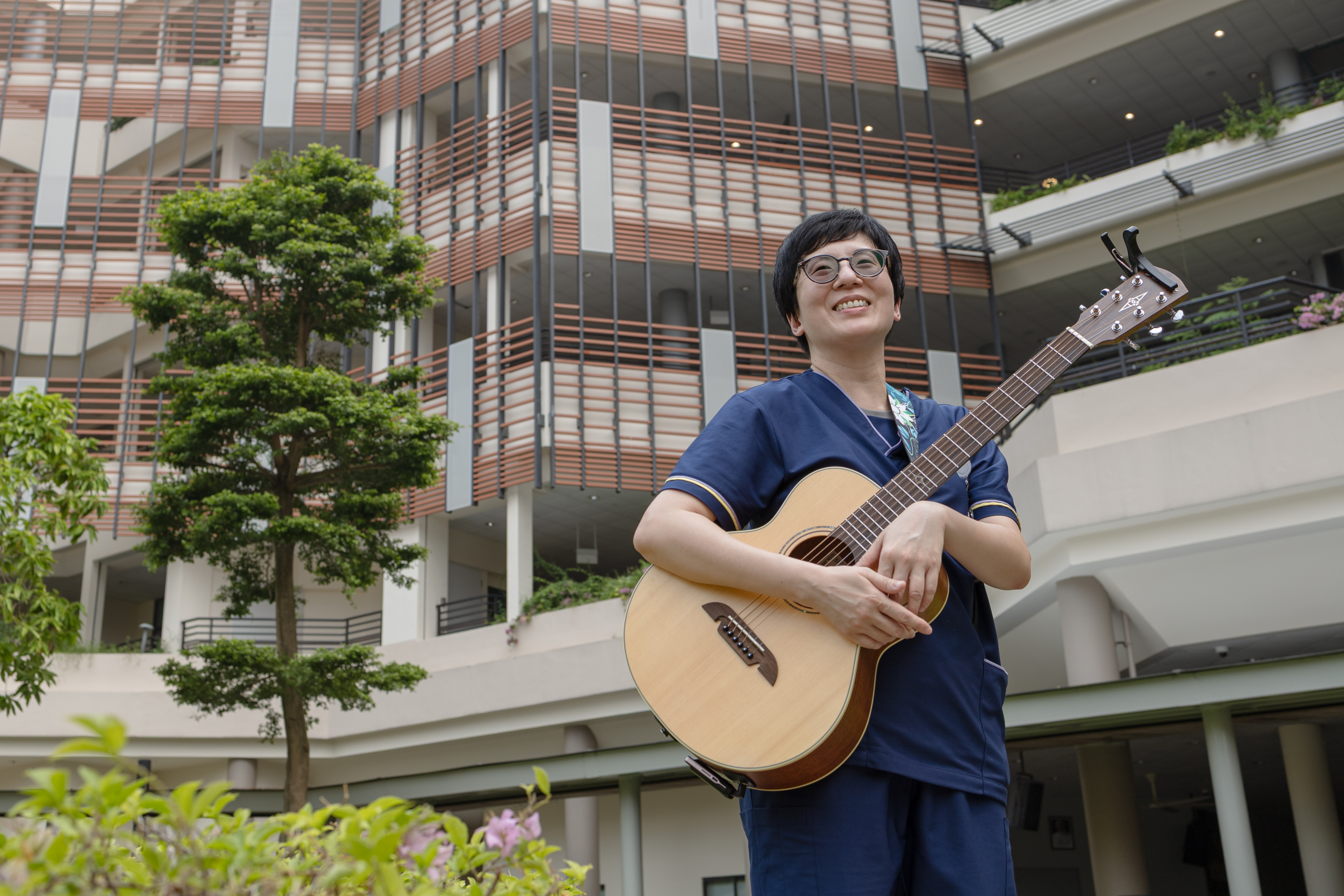
Joanne Lau, music therapist at St Joseph’s Home, a non-profit nursing home, hospice and eldercare facility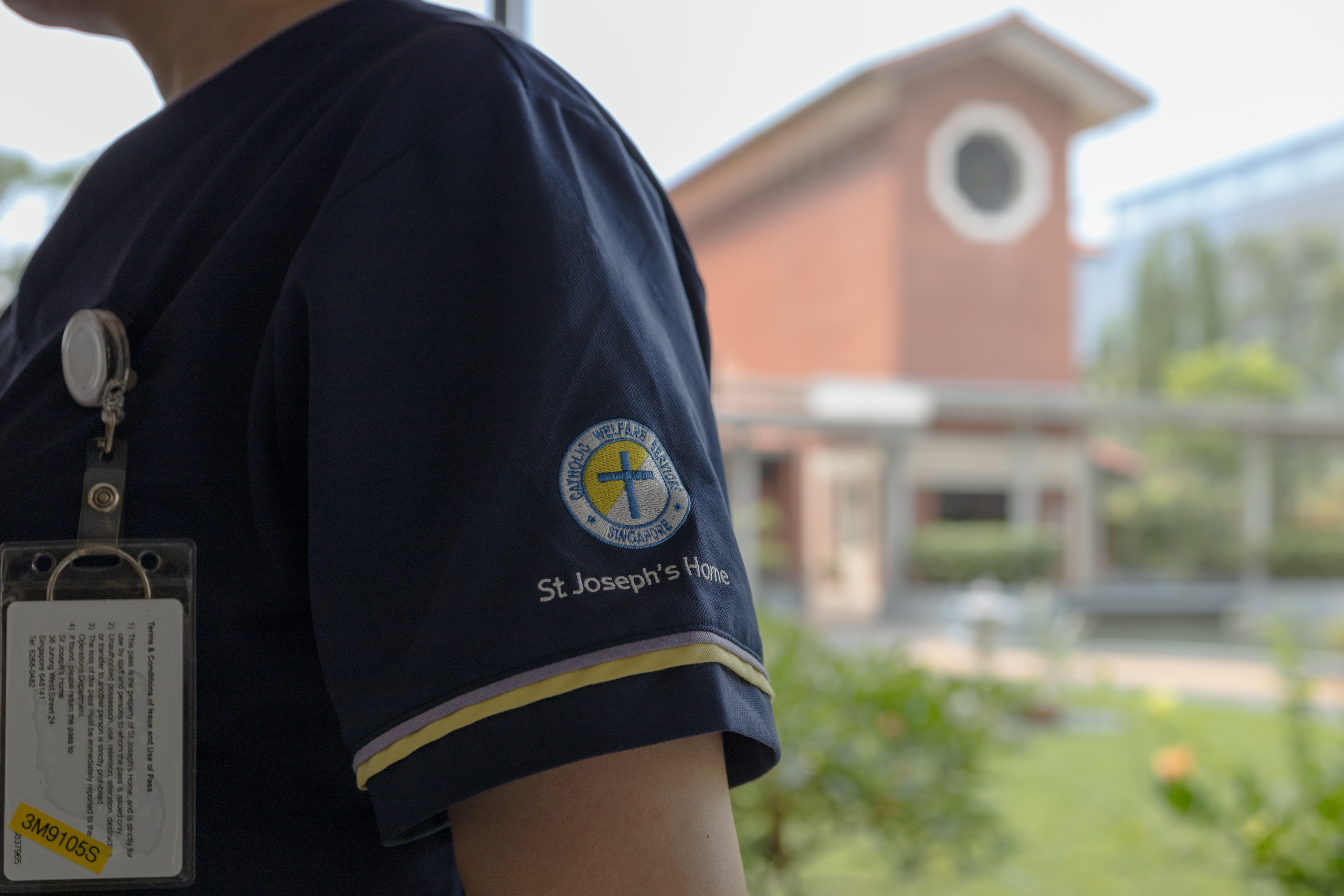
Music therapy is a “second act in life” for Joanne Lau, who had been working in the finance sector. Chancing upon an article about LASALLE’s new MA in Music Therapy in Lianhe Zaobao, Joanne took a leap of faith and applied with an open mind, ready to go with the flow and see where this journey into the unknown would take her. Music has always been an important part of her life, and she was interested to see how music can be used as a therapeutic modality to establish deep and meaningful connections with others.
The programme pushed her physically, mentally and emotionally. Juggling academic work such as research and assignments alongside clinical placements demanded discipline and stamina.
Because music therapists bring their authentic selves into the sessions to hold space for the clients, her clinical placements demanded much emotional sensitivity, vulnerability and awareness.
During her third clinical placement, where Music Therapy students are placed in a context without an existing music therapy programme and tasked to draw upon their training and develop the structure for one, Joanne was assigned to St Joseph’s Home (SJH).
It was here that she designed the programme she would now come to run full-time: aimed at supporting residents in the areas of dementia and palliative care, mental health and physical rehabilitation.
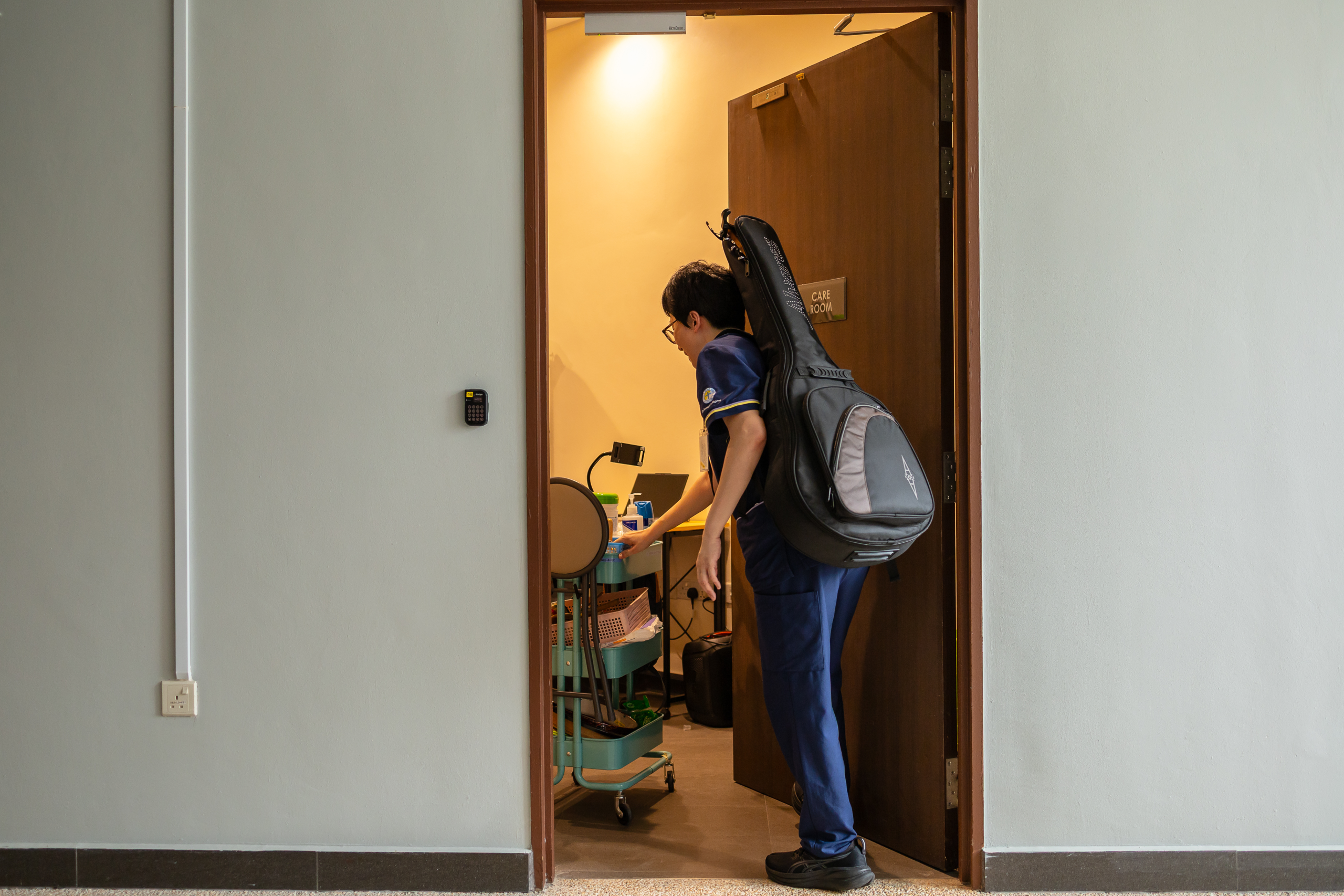
Joanne with her trusty trolley, ready to do her rounds.
What is a typical day like as a music therapist in SJH?
I’m part of the Integrative Creative Therapies (ICTS) team, comprising occupational therapy, music therapy and art therapy. A typical day starts with a team roll-call where the team shares key updates on residents we are seeing. After the roll call, I set off on an action-packed day of going around the home with my guitar or keyboard, as well as my trusty trolley filled with small instruments and disinfectant wipes.
I see residents either individually or as part of a group. Individual residents are referred from the multidisciplinary team here at SJH comprising doctors, nurses, allied health professionals, and social workers. The referral form is based on the biopsychosocial-spiritual (BPSS) model to help me understand presenting concerns of the referred individual that music therapy may potentially help to address.
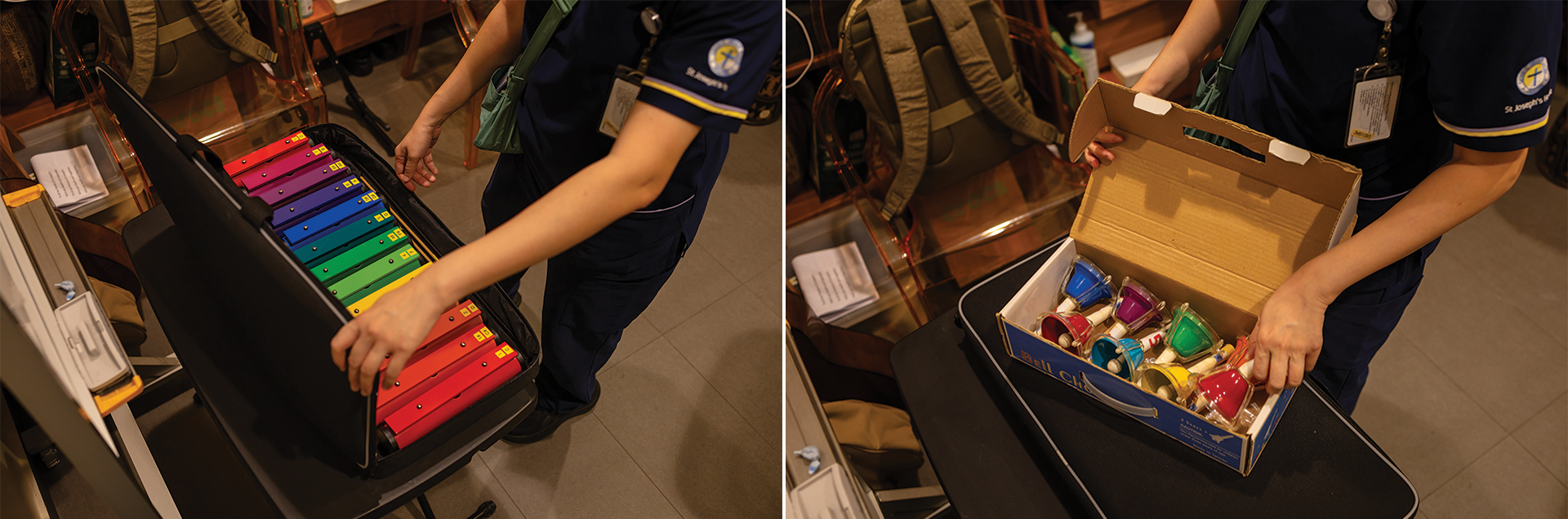
The tools of the trade: resonator bells (left) and handbells (right) which make music-making accessible to residents as they can be played without prior music training, and support clinical goals such as physical rehabilitation of motor function and cognitive engagement.
For example, residents with dementia may be referred to music therapy to address Behavioural and Psychological Symptoms of Dementia (BPSD). They may benefit from musical activities such as singing, instrument playing or reminiscence to help them regulate their mood and behaviours.
In palliative care, residents may benefit from interventions such as therapeutic songwriting as part of legacy leaving. The resident and I co-write songs that narrate their lives and key memories which can be left behind for loved ones as a way to honor the memory of the resident.
I also do group music therapy sessions with residents in the clusters where they spend most of their time. The groups are open in nature where residents who are available can join. Clinical goals of such groups include socialisation and cognitive engagement through group musical activities.
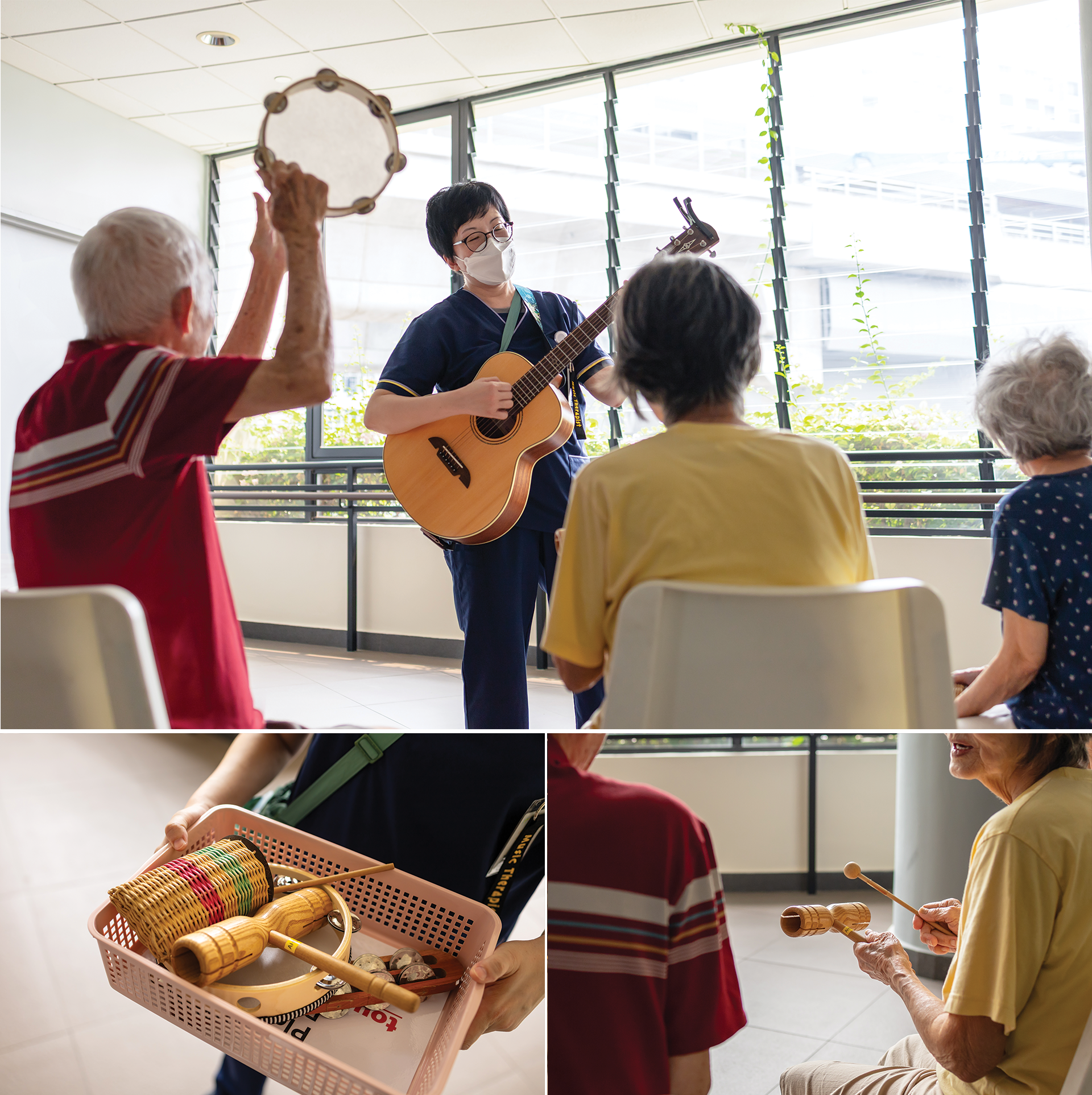
(clockwise from top) Joanne singing dialect songs while residents beat out the rhythm on their respective percussion instruments; a basket of simple percussion instruments from Joanne’s trolley; a resident holding a wood block, which sparked brief chatter about tok tok mee sellers in days of yore.
I usually cap the day off by completing documentation of my sessions. My training in the programme taught me the importance of documentation as we develop ourselves as clinicians so that our work can be understood by the multidisciplinary team that we work with.
While it is still early days, I hope to, at some point, contribute to the local evidence base on music therapy by sharing my work through research papers. This would help to contribute meaningfully to advocacy and discourse about music therapy specific to the Singaporean context.
Someday—when I’m more settled in—this is something I want to work on.
Were you always interested in the geriatric population?
I was born and raised in Singapore, and besides English and Mandarin, I also speak Cantonese and some Hokkien and Teochew. I felt that this specific combination of cultural context and fluency in dialects could enable me to support the geriatric population more effectively through music therapy that is culturally relevant.
Through my clinical placements in a community hospital, hospice and nursing home, I had the opportunity to work with geriatric clients across the care spectrum and gained a better understanding of the challenges they face physically, mentally, emotionally and socially.
How has your training prepared you for practice in the real world?
Our training has been designed to equip us with both the practical experiences of being a clinician, as well as hone our skills in doing research on music therapy to contribute meaningfully to the evidence base as we develop ourselves as clinicians. All of these help us to hit the ground running, even if we may be working in contexts without an existing music therapy programme.
We also had modules that helped us to develop our clinical musicianship and build our repertoire of culturally relevant songs for different demographics, whether it’s dialect songs and oldies for an older client, or pop songs for adolescent clients. These are important tools that equip us with greater flexibility to adapt to different clinical populations.
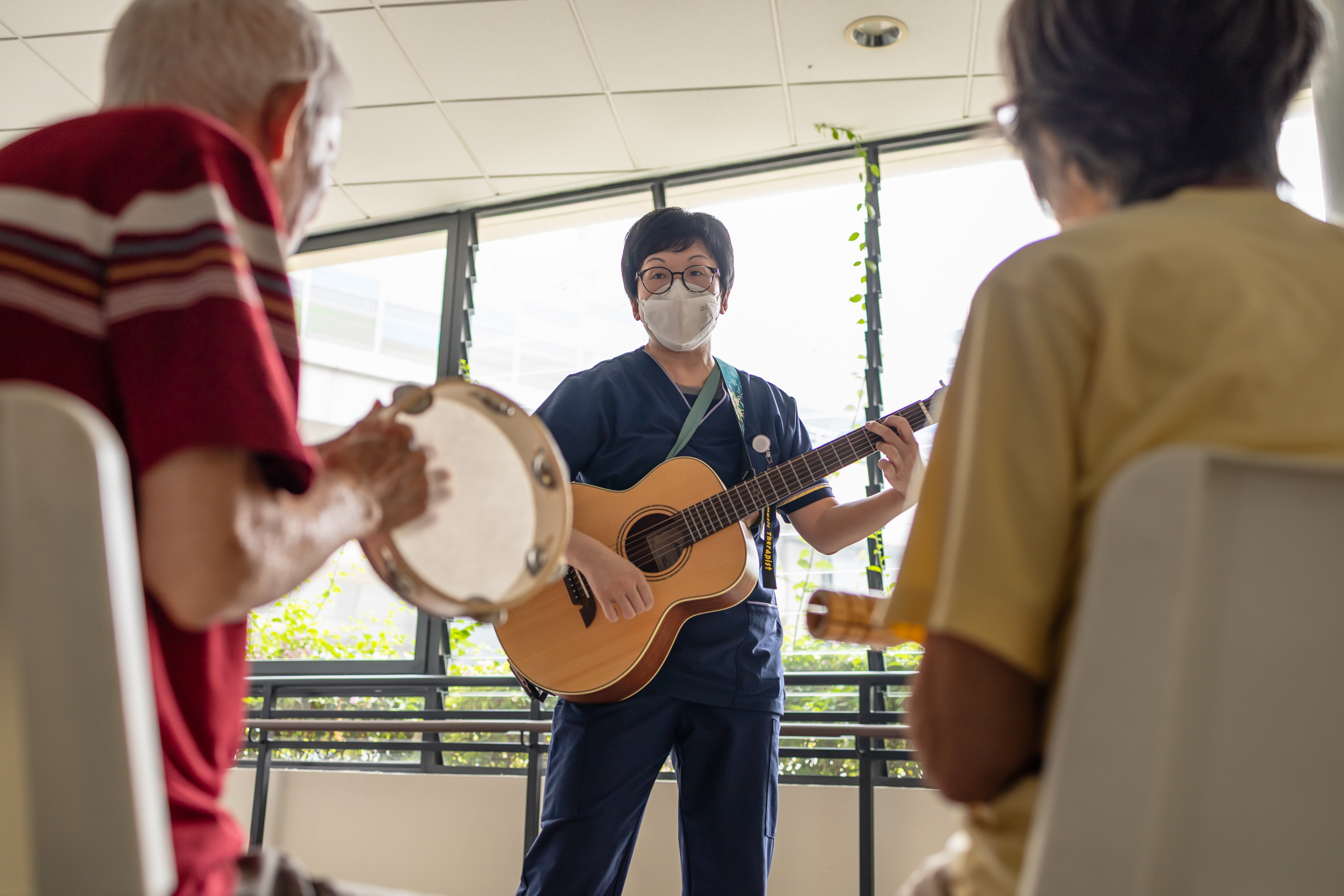
Joanne’s repertoire of dialect oldies includes Ban Chun Hong (望春風), Lang Zi Xin Sheng (浪子心声), Ai Piah Jia Eh Ya (爱拼才会赢) and more.
You’ve mentioned that the work of a music therapist can be taxing, whether physically, mentally or emotionally. What fuels your sense of purpose?
I would say that every encounter with clients in clinical practice continuously reinforced my belief in the power of music in health and well-being.
When you sing or engage in music with your clients face-to-face, you create a direct connection. When people receive an intentional delivery of live music, they respond, and you establish a therapeutic space in which you can begin to build a therapeutic connection.
I have come to appreciate the privilege that I enjoy when clients let me into their world through music, and allow me to be part of their journeys.
As a fresh graduate, what are your priorities for now?
I want to continue learning about who I am as a clinician. How can I keep my practice sustainable, while also working hard to make a difference and build a strong foundation for the relatively new music therapy programme here?
Any advice for people considering applying to MA Music Therapy?
The programme is rigorous and not for the faint of heart, but it is a rewarding journey of self-discovery if you persevere and stay the course.
When you apply for the programme, you are also taking an important first step towards contributing to the evidence-based use of music in healthcare to help our clients achieve their health outcomes. It is an exciting time for the music therapy profession.
Be part of profession which uses music interventions within a therapeutic relationship that aims to provide functional, educational, rehabilitative or well-being outcomes. Get a first-hand look at LASALLE’s MA Music Therapy through The Postgrad Experience and explore the practice and research cultures of LASALLE’s MA programmes.
Sign up for The Postgrad Experience Apply now
Related stories
What happens after art school
MA Music Therapy series: Cassandra Chng on bridging mental health provisions in a heartland node
3 Nov 2026
Long a believer in the power of music, Cassandra Chng first searched for an education in music therapy in 2014. At that time, no local programmes for it existed, so …
What to expect in LASALLE, In conversation with
In conversation with: MA Design graduand Pann Lim on the simple question that led him to pursue an MA
26 Oct 2026
Despite having 28 years of design practice—and countless design accolades—under his belt, creative director Pann Lim found himself stumbling in recent years over a simple question from young students and …
In conversation with
In conversation with: Kyle Balda, director of Minions, Despicable Me 3 and The Sheep Detectives
8 Oct 2026
In June 2026, the Puttnam School of Film & Animation, in partnership with Cartoons Underground, hosted animation director Kyle Balda for a masterclass with students. Balda is a director and …
What to expect in LASALLE
Global Creative Dialogues: Cross-university collaborations and knowledge exchange in fashion, illustration and technology
6 Oct 2026
This article was originally written for and published in HKBU AVA Magazine #15 (September 2026) and is reproduced with permission. From August to November 2025, “Stories From Our Wardrobe” brought …