


Diploma in Music
Applications have closed.
Programme details
Shape your sound. Build your future in music.
Designed for aspiring musicians of today, the Diploma in Music programme offers an immersive, practice-driven education in contemporary music. Through a rigorous and hands-on curriculum, you will develop strong instrumental or vocal technique while gaining essential musicianship skills.
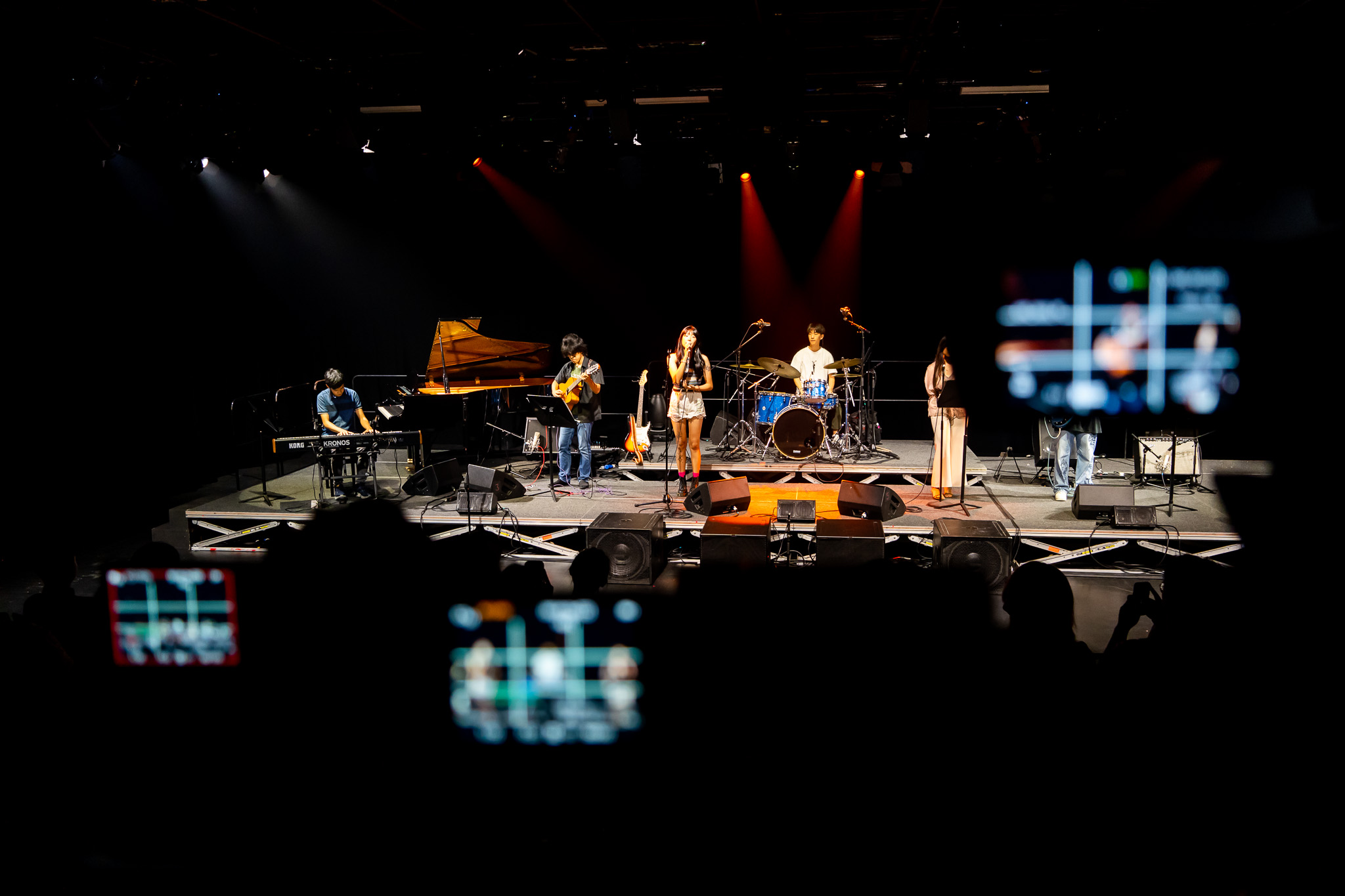
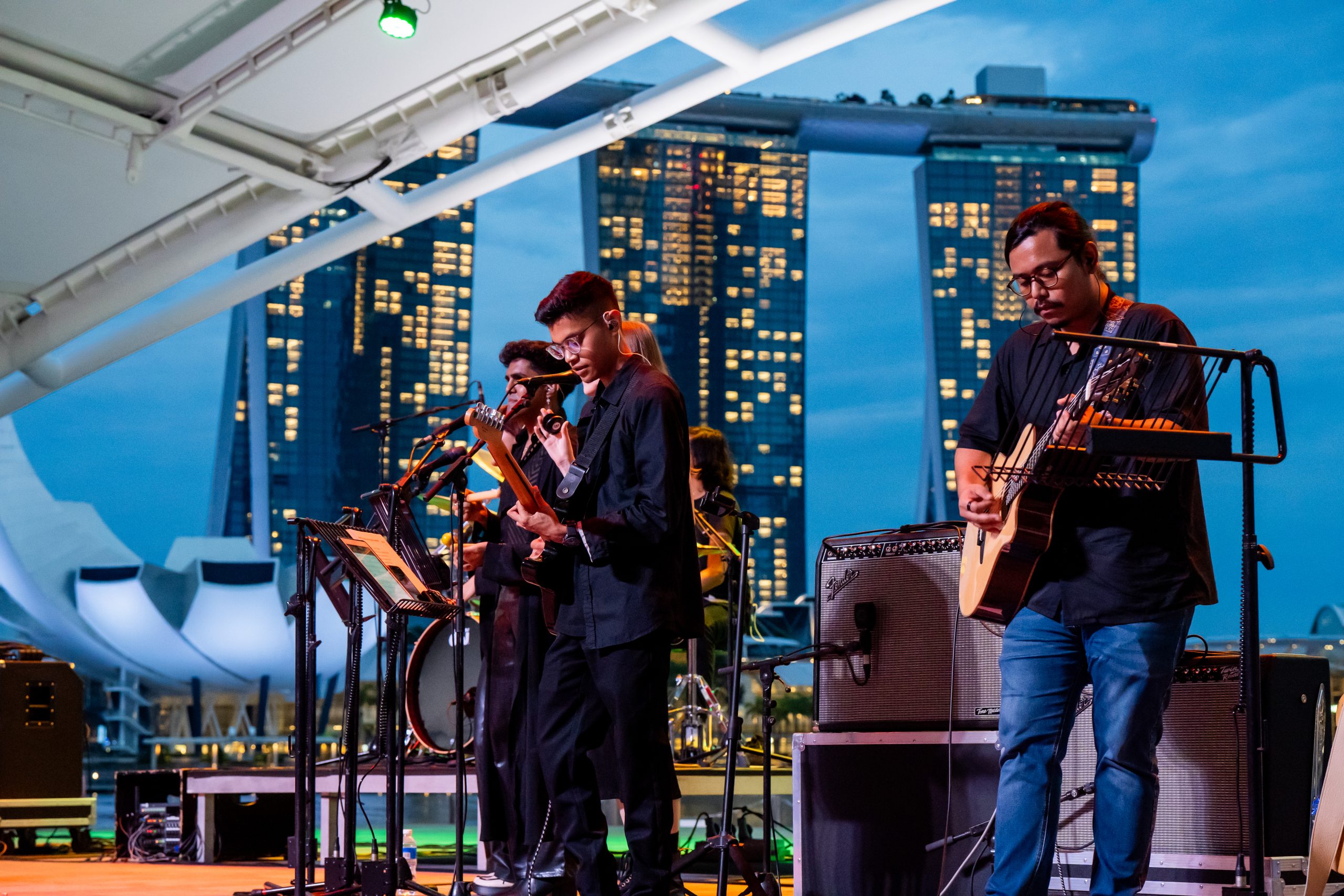
You will study music theory, sight-reading, aural skills, composition and arranging, alongside music production and technology. Regular performance opportunities, both on campus and in public settings, ensure that what you learn in the classroom is immediately applied on stage and in real-world contexts.
The programme is designed to shape you into a confident, adaptable contemporary musician. You will learn to sight-read fluently, perform across a wide repertoire, collaborate effectively and respond professionally to a diverse range of musical contexts.
A typical week includes ensemble rehearsals and performances, one-to-one instrumental or vocal lessons, theory and aural training, production and technology classes and close mentorship from highly experienced musicians and academics actively working in the industry.
With a progressive structure of modules and assessments benchmarked against global industry standards, the programme will guide you step by step through the foundations of musicianship, performance and professional practice. You will also engage in critical thinking, public performance and industry internships—developing not only your artistic voice but also the skills, discipline and awareness needed to navigate today’s music industry with confidence.
Industry-led learning
Collaborative environment
Personal artistic development
|
Year 1 |
||
| Studio 1 |
20 credits |
This module may include the following components:
|
| Craft, Techniques and Technologies 1 |
30 credits |
This module may include the following components:
|
|
Elective: Soundscapes & Stories: Listening, Thinking, Creating OR Elective: The Modern Musician’s Playbook: Skills for Today’s Industry |
10 credits |
|
| Studio 2 |
20 credits |
This module may include the following components:
|
| Craft, Techniques and Technologies 2 |
30 credits |
This module may include the following components:
|
|
Elective: Studio, Stage & Beyond OR Elective: Next-Level Music: Experiment, Innovate, Create |
10 credits |
|
|
Year 2 |
||
|
Studio 3 |
30 credits |
This module may include the following components:
|
|
Craft, Techniques and Technologies 3 |
20 credits |
This module may include the following components:
|
|
Elective: Introduction to Music Business OR Elective: Content & Connection: Communication for Music Professionals |
10 credits |
|
|
Studio 4 |
30 credits |
This module may include the following components:
|
|
Craft, Techniques and Technologies 4 |
20 credits |
This module may include the following components:
|
|
Elective: Career Ready: Strategies for the Gig Economy OR Elective: Career Ready: Strategies for Creative Professionals OR Elective: The Art of Rhythm: Ensemble & Percussion |
10 credits |
|
|
Year 3 |
||
|
Studio 5 |
60 credits |
This module may include the following components:
|
|
Internship |
20 credits |
|
|
Final Year Praxis |
40 credits |
|
- Practical portfolio
- Creative Process Journal
- Technical folder
- Journal
- Portfolio (pass/fail)
|
The LASALLE Diploma framework is anchored in a professional and self-directed approach, with the aim of nurturing highly-engaged, self-assured student learners of the 21st century. The Diploma framework has a modular structure which involves the following core modules: |
|
| Studio |
Studio modules primarily anchor you to a particular field/discipline of study. All Studio modules assess you in writing and ensure adequate historical and theoretical contextualisation are embedded. These modules serve as sites of creative inquiry, providing opportunities for you to discover, investigate and apply ideas, methods and materials. They also create space for cross-disciplinary practices, enabling you to engage with perspectives and approaches beyond your primary discipline. The Final Project culminates in a major studio work which encourages you to demonstrate your artistic practice, conceptual and technical rigour. |
| Craft, Techniques and Technologies |
The Craft, Techniques and Technologies modules prepare you to appreciate and develop the requisite technical skills for your creative work. The particular emphasis is on honing craft, building strong technique and fluid engagement with digital/technological skills. These capabilities are aligned with and mapped to SkillsFuture Singapore’s Skills Framework, ensuring that your technical and applied skills are future-proofed and benchmarked against current industry standards and relevant 21st-century competencies that underpin effective studio practice. |
| Electives |
Electives both broaden and deepen your learning, allowing you to explore new areas of interest while enriching your understanding and practice within your core discipline. By engaging with diverse subjects and approaches, you gain fresh perspectives that enrich your primary practice, strengthen critical thinking, and enhance your capacity for innovation. Designed to reflect emerging industry developments, electives strengthen your professional readiness by helping you develop relevant, future-focused skills and a more versatile creative profile. |
| Internship, Final Year Praxis |
In Year 3, you will embark on internships which provide hands-on industry experience within your discipline, allowing you to apply your creative skills in real-world, professional contexts. These placements give you the opportunity to work on live projects, gain insights into industry workflows and develop professional networks, while receiving mentorship from experienced practitioners to guide your growth and career readiness. In the Final Year Praxis module, you will consolidate and apply the skills, knowledge and techniques you have developed in industry-focused projects. The module is designed to support your professional and creative development, fostering creative resilience, critical thinking, and industry readiness. |
LASALLE uses a 5–point Grade Point Average (GPA) system to track students’ academic progress throughout their studies.
Students receive letter grades for each module taken. Each grade corresponds to a grade point as shown below:
| LETTER GRADE | GRADE POINT |
| A+ | 5.0 |
| A | 5.0 |
| A– | 4.5 |
| B+ | 4.0 |
| B | 3.5 |
| B– | 3.0 |
| C+ | 2.5 |
| C | 2.0 |
| D+ | 1.5 |
| D | 1.0 |
| F | 0.0 |
The Cumulative Grade Point Average (CGPA) represents the grade point average of all modules attempted by the student. A minimum CGPA of 2.00 is required for graduation.
The computation of CGPA is as follows:

All modules, including repeat attempts, are included in the computation of the CGPA with the exception of modules that are exempted or where students were absent with valid reasons.
The classification of award and corresponding CGPA requirement are as follows:
| CGPA RANGE | CLASSIFICATION OF AWARD |
| 4.00 — 5.00 | Diploma with Distinction |
| 2.00 — 3.99 | Diploma |
LASALLE recognises the important role of artists and designers in creating a sustainable and caring world. The curriculum provides opportunities for students to identify and explore issues around sustainability (from ecology and global climate change to the sustainability of their own creative practices and wider cultural communities) and care (for the well-being and advancement of oneself and others).
The College actively encourages students to engage with and investigate these crucial contemporary issues as part of their studies, including through their projects, and critical and creative outputs. Through interdisciplinary learning and strong engagement with these topics, the aim is to empower students to lead the way towards sustainable practices and caring communities within the cultural and creative industries.
LASALLE recognises the role of artificial intelligence (AI) as a profound influence on contemporary creative and professional practices. AI plays a significant role in learning and teaching by enabling innovative methods and approaches.
The College actively encourages you to critically and responsibly investigate AI, evaluating its impact within your discipline and making informed choices to adopt, adapt or reject emerging tools while ensuring your practice remains original, professional and future-ready.
This approach equips you with both technical adaptability and reflective discernment, preparing you for a sustainable future in the creative industries.
Basic materials for learning are provided by the College.
As a developing artist, you are required to have certain items that are personal to you and cannot be shared. Such items include books, dance shoes, rehearsal clothes, safety boots, portable musical instruments, paints, canvas, basic tools, design software, cameras, etc., that will support you through your three-year learning journey. The College does not encourage the purchase of extravagant or costly materials or equipment. Our lecturers can provide you with affordable suggestions.
You are also encouraged to have your own laptop for education. If you do not own one, computer labs are available on campus with requisite software for you to undertake your work.
There may be opportunities for you to undertake extra-curricular study trips to enhance your overall learning. Trips are not compulsory and may incur additional costs.
Performer, producer, composer/arranger, songwriter, director, educator, vocal coach, session musician or entrepreneur.
Admissions information
Early Admissions Exercise for August 2027 intake
The Early Admission Exercise (EAE) is an aptitude-based admissions exercise open to graduating O-Level students, final-year Nitec and Higher Nitec students from the Institute of Technical Education and graduating Integrated Programme (IP)/International Baccalaureate (IB) Year 4 students. This exercise allows students to apply for and receive conditional offers for admission to LASALLE prior to receiving their final grades.
Application period: 1–22 May 2026.
Audition
To determine your suitability for the programme, you will need to submit a video audition recording so we can assess your technical and musical abilities, as well as your artistic potential.
Audition repertoire
You will need to submit a video recording of three contrasting pieces of music in any contemporary popular style or classical genre (depending on the stream you are applying to) that best highlight your technical skills and musicality. ‘Contrasting’ can mean:
- Different tempos (e.g. ballad, medium, fast).
- Different styles (e.g. pop, jazz, funk).
- Different genres within a style (e.g. rock ballad, rock-pop, hard rock).
- Different metres (e.g. 4/4, 3/4, 6/8).
- Different historical periods (e.g. Baroque, Classical, Romantic).
- Or any other characteristic that renders the pieces contrasting.
All pieces should be performed in full, excerpts are not accepted.
Voice auditions
Vocal recordings must be accompanied. You may sing with a backing track, over the original recording, accompany yourself on the piano or guitar, or with another musician. A cappella recordings (without accompaniment) are not permitted.
Instrumental auditions
You may perform with a backing track or on top of the original recording. Guitarists and pianists may perform one solo piece, provided it is arranged as a solo work. For classical pianists, each movement of a multi-movement work will be considered as one piece.
Your video submissions should be recorded in one take, no edits are allowed. Your face must be clearly visible, and instrumentalists should ensure that both their faces and hands are visible while playing. Please avoid using filters, special effects or social media videos (e.g. TikTok). Pre-recorded audio or lip-syncing is not permitted. Vocalists should refrain from using any tuning correction software or excessive effects, your voice should sound as natural and unprocessed as possible.
Additional requirement
If we wish to know more about your audition recording, we will arrange for a discussion with you. Additionally, in some cases, candidates may be required to attend a second live audition on campus.
List of instruments accepted
The programme welcomes applications presenting the following instruments: voice, electric guitar, electric bass, double bass, piano/keyboard, drums, saxophone and classical piano. All other applications will be considered on a case-by-case basis. If your instrument is not on this list, please email [email protected] to enquire before submitting your application.
Diploma tuition fees for August 2027 intake (per annum fees)
NOTE
- Funded/subsidised fees for Singapore Citizens and Permanent Residents qualify for GST subsidy from MOE, all other fees include 9% GST from 2024.
- Fees are due on the first day of each semester.
- Fees are subject to change.
- Correct as of August 2026.
A non-refundable application fee (inclusive of GST*) is chargeable per application. Application is only complete upon receipt of your application fee and all necessary documents. Please ensure your application fee is paid and documents are uploaded. LASALLE reserves the right to withdraw the applicant if the application fee remains unpaid and documents are not received by the due date.
* GST is at 9% from 2024.
| SINGAPORE CITIZEN/PERMANENT RESIDENT APPLICANTS | INTERNATIONAL APPLICANTS |
|---|---|
| S$75 | S$120 |
All payment to LASALLE must be made in Singapore Dollar. In line with the Singapore government's move towards a cashless society, online payments are strongly encouraged. Below are the payment modes acceptable by LASALLE.
| PAYMENT METHOD | PAYMENT MODE |
|---|---|
| Online payment |
Flywire |
Basic materials for learning are provided by the College.
As a developing artist, you are required to have certain items that are personal to you and cannot be shared. Such items include books, dance shoes, rehearsal clothes, safety boots, portable musical instruments, paints, canvas, basic tools, design software, cameras, etc., that will support you through your three-year learning journey. The College does not encourage the purchase of extravagant or costly materials or equipment. Our lecturers can provide you with affordable suggestions.
You are also encouraged to have your own laptop for education. If you do not own one, computer labs are available on campus with requisite software for you to undertake your work.
There may be opportunities for you to undertake extra-curricular study trips to enhance your overall learning. Trips are not compulsory and may incur additional costs.
Medical Insurance Scheme
All students of LASALLE are required to be covered under the Medical Insurance Scheme (MIS). The annual coverage of S$20,000 includes school-related activities throughout the programme duration.
The current premium rate is $29.98 (inclusive of 9% GST) payable each semester. This premium rate is subject to change based on the prevailing premiums charged by the insurer and prevailing GST rate.
Application dates for scholarships will be reflected in the various scholarship pages. Other externally sponsored scholarships are also available to students. Enquiries and applications may be directed to the respective organisations.
Please note that miscellaneous fees are not covered by scholarships, bursaries or the Mendaki Tertiary Tuition Fee Subsidy (TTFS).
A range of financial assistance schemes, grants and loans are made available to help meet a portion of the educational expenses of students.
Application dates for financial assistance will be reflected in the various bursary pages.
Please note that miscellaneous fees are not covered by scholarships, bursaries or the Mendaki Tertiary Tuition Fee Subsidy (TTFS).
If this is your first time venturing into Asia, here are some of the reasons why Singapore is an ideal place for the global-minded arts student.
The College provides a dynamic learning environment that is conducive for you to pursue academic excellence and develop skills, creativity and critical reflection through a comprehensive range of student support services.
Let our appointed network of overseas representatives help you with your application.
Find out everything you need to know to ensure that your application goes without a hitch.
Highlights
Explore our highlights
Cultural Medallion & Young Artist Award

Ars Nova Festival
Singapore Youth Award
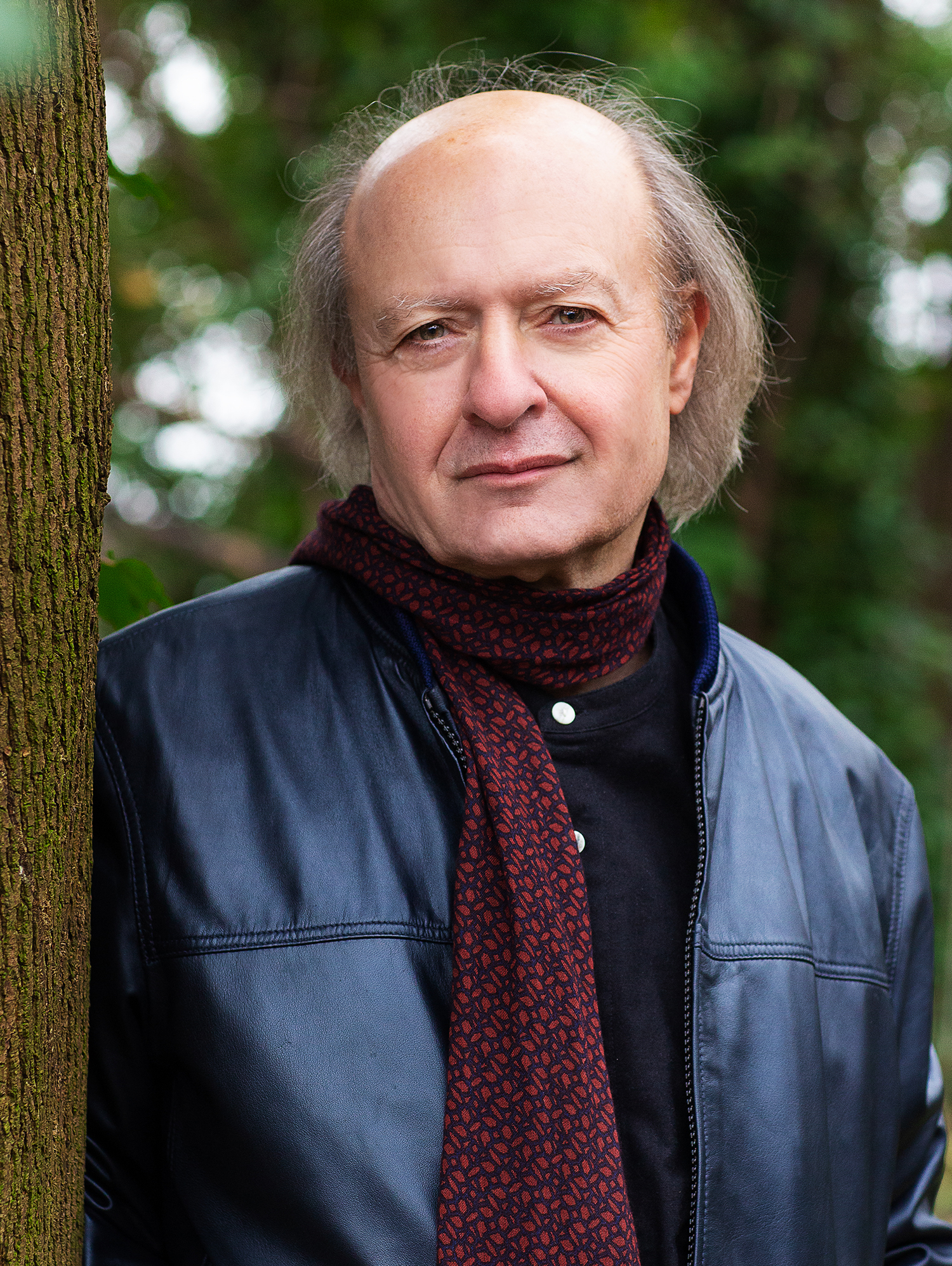
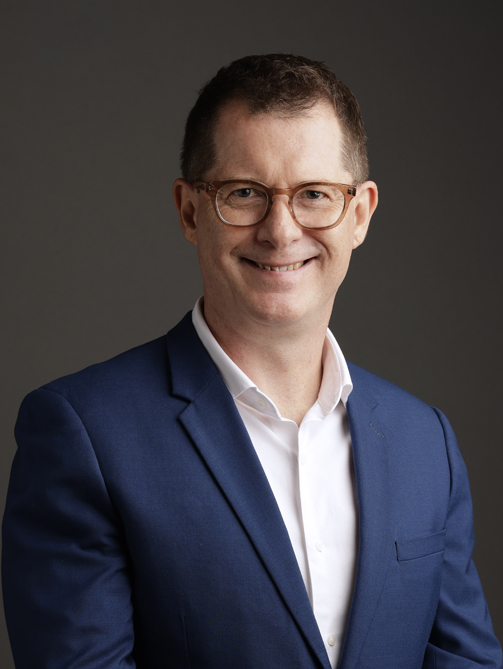
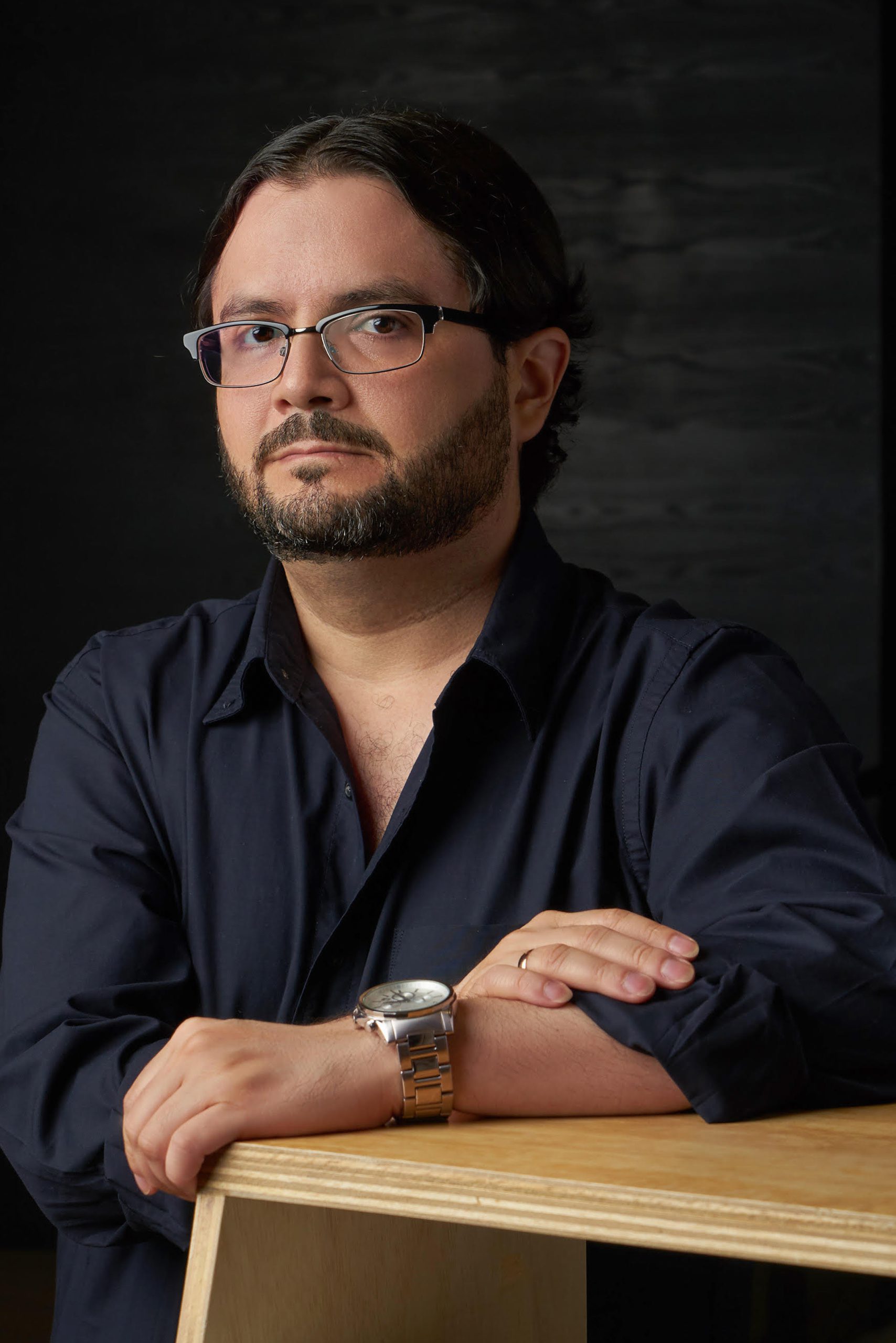
Faculty
 Previous

Campus tour
Diploma in Theatre Production and Management
BA (Hons) Music
BA (Hons) Musical Theatre