


When Park Chan-wook’s debut feature The Moon Is… the Sun’s Dream was released in the spring of 1992, the South Korean film industry had hit its lowest domestic market share in history.
From the 1970s through the early 1990s, Korean theaters, much like those across the globe, were overwhelmingly dominated by Hollywood. As local film critic Kim Young-jin famously lamented, the industry entered 1993 “without a single coin to inherit from the past,” embarking on a solitary battle for its very survival.
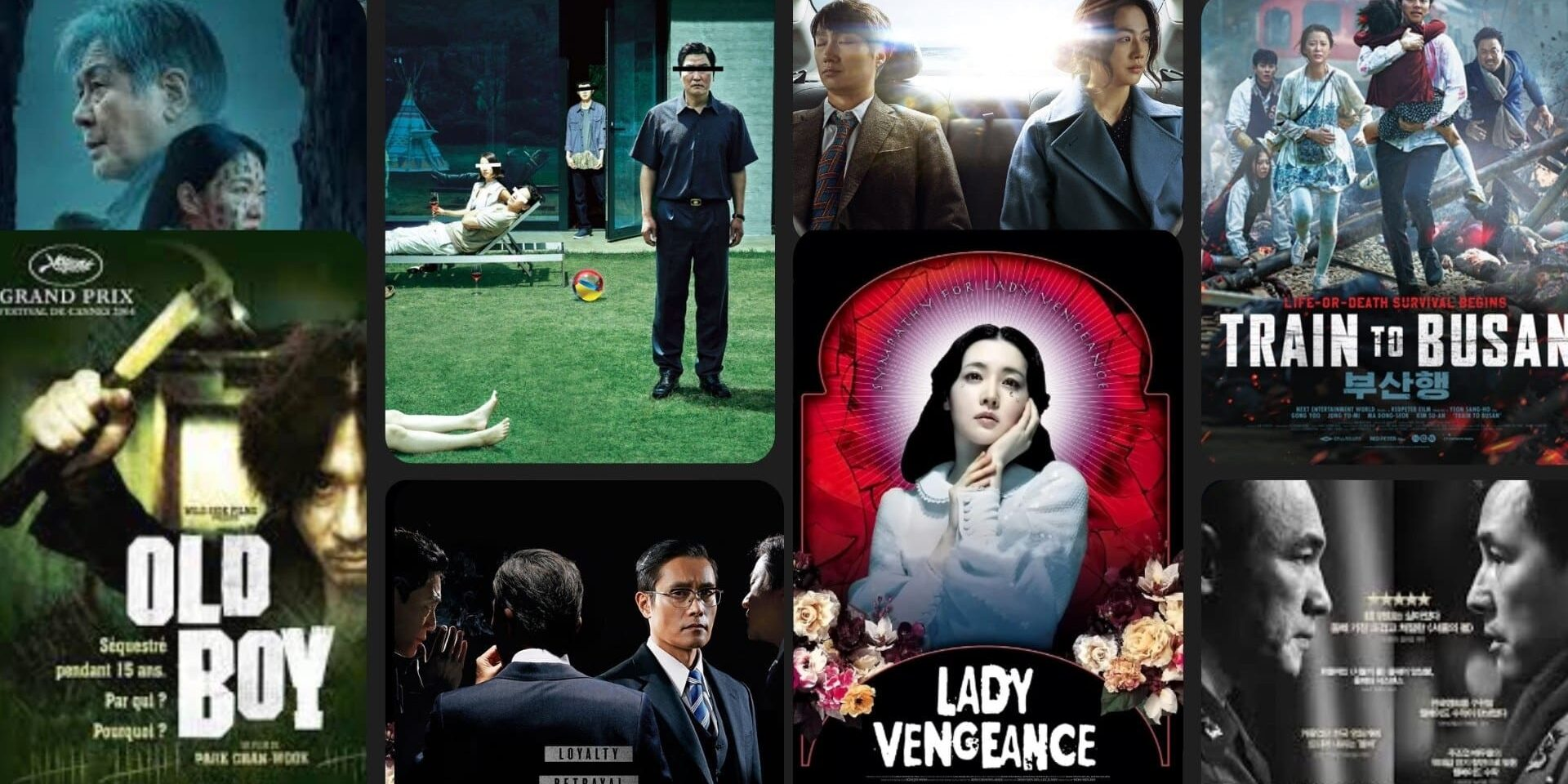
Few critics, students, or practitioners saw a viable future for South Korean cinema. Yet barely a decade later, South Korea achieved the seemingly impossible: reclaiming its domestic market from Hollywood and ushering in a watershed era. By 2003, a year marked by landmark releases such as Oldboy, Memories of Murder, A Tale of Two Sisters, Save the Green Planet!, and Spring, Summer, Fall, Winter… and Spring, South Korean cinema had become a global phenomenon, hailed by Film Comment as “one of the greatest renaissances in global filmmaking the world has ever seen.”
How did an industry once considered “invisible” cinema transform into a global powerhouse in just over a decade, and how do its ripples continue to shape contemporary media?
Bridging historical analysis with industry shifts, this talk traces the roots of the 1990s and 2000s South Korean film renaissance. It examines how a unique convergence of forces such as post-democratisation cultural energy, vibrant cinephile and cinematheque movements, the rapid expansion of film schools and creative education, strategic government policies, and the entry of new media conglomerates revitalised local filmmaking.
Finally, the talk explores the lasting legacy of this renaissance, navigating shifting geopolitical dynamics with the US and China, and examining how this creative ecosystem laid the foundation for South Korea’s unprecedented global impact in the era of Netflix and streaming platforms.
Sangjoon Lee is Associate Professor at the School of Creative Media, City University of Hong Kong. He is a scholar of Asian cinema and media whose interests span South Korean cinema and popular culture, international film festival, the Cultural Cold War, and the film and digital media industries in contemporary Asia.
Lee is the author and editor of Cinema and the Cultural Cold War: US Diplomacy and the Origins of the Asian Cinema Network (Cornell UP, 2020), Border-Crossings in Celluloid Asia: South Korean Cinema and the Sinophone World (Harvard, 2027), Hallyu 2.0: The Korean Wave in the Age of Social Media (Michigan, 2015), Rediscovering Korean Cinema (Michigan, 2019), The South Korean Film Industry (Michigan, 2024), Remapping the Cold War in Asian Cinemas (Amsterdam, 2024), Routledge Companion to Asian Cinemas (2024), and Netflix and South Korean Media: Platforms, Genres, and Global Reception (Brill, 2027).
Lee’s works have been translated into Korean, Japanese, Chinese, and Italian.